
Sub-Total: $0.00
Post
Why Isn’t Tesla Running Its Cybercab Line Every Day? It’s Outpacing Deployments
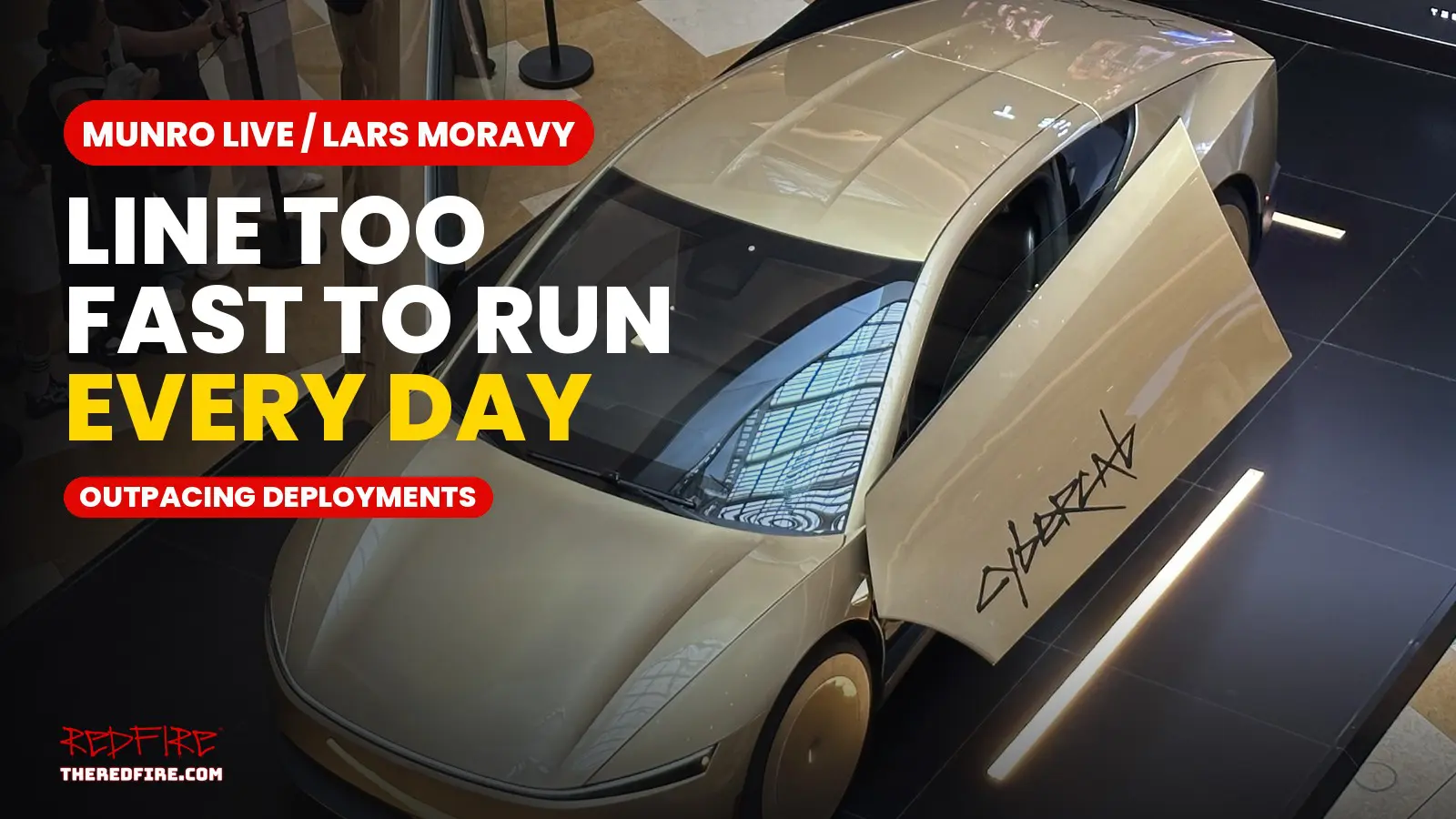
Tesla’s Cybercab line at Giga Texas can build the two-seat robotaxi faster than Tesla can put it into service, so it doesn’t run every day. That comes from Lars Moravy, Tesla’s vice president of vehicle engineering, in a Cybercab engineering deep dive from Munro Live filmed on the line. TeslaNorth reported it Oct. 26, 2026.
“We don’t run every day because the line can run so fast, it’s currently outpacing our deployments,” Moravy said. He called it “a bit of a race,” adding that “right now, the manufacturing line’s ahead.”
The official @robotaxi account shared Munro Live’s video Monday and called it a “Cybercab engineering deep dive.”
What it means for owners
Here’s what Moravy’s comments mean for Tesla’s Robotaxi plans:
- Building cars isn’t the bottleneck right now. Deploying them is. The pace depends on how fast Tesla adds Robotaxi service.
- This isn’t about customer inventory. Moravy was talking about matching production to deployment. He didn’t say anything about Cybercabs for sale.
- Watch Dallas. On its Q3 2026 earnings call, Tesla said Cybercab service would launch in Dallas in November. That could help deployments catch up.
Why the line runs so fast
It starts with what Tesla calls “unboxing.” Instead of building the car down one long line, Tesla splits it into front, rear, side and center modules. Each module is built and tested on its own before they’re joined. “The problem wasn’t the automation, the problem was the design,” Moravy said.
Key numbers from the tour:
- About 78% automated overall. The framing line is already 100% automated.
- 25 automated final-assembly stations. Engineers said a typical Model Y line has five to 10 times as many.
- About 50% less floor space per vehicle.
- No paint shop. The exterior plastic panels get their color in the mold.
- Target: a 10-second cycle time with 100% automation.
Last week’s earnings call already hinted at this. Moravy said the Cybercab has half the parts of any Tesla and that its line can go faster than its listed capacity.
Built for high mileage
According to Munro Live’s tour, engineers said the Cybercab is designed to “run half a million miles at least.” Its drive unit uses an 11:1 gear ratio, compared with about 9:1 on most Teslas, because a city robotaxi doesn’t need a high top speed.
Battery details come from Munro Live’s tour. The 4680 pack sits in a steel enclosure. It uses wireless battery management and fast contactors that let Tesla drop the pyro fuse. Today’s Model 3 and Model Y still use a pyro fuse. Tesla’s battery director graded the pack an “A-minus” for how easy it is to build, compared with a “D” for the Model Y structural pack.
Munro asked when it could get a Cybercab to tear down. Tesla’s answer: “Not yet.”
The bottom line
Tesla’s Cybercab factory is ahead of its Robotaxi rollout. The next number to watch is how fast deployments ramp, starting in Dallas.
Also in The Brief: Tesla has 300+ Cybercabs in Austin, with Dallas next
Come see tech in a new light.
Sources
- Munro Live, “Tesla Cybercab Deep Dive: Inside the Engineering with Lars Moravy and Team”: https://www.youtube.com/watch?v=UIrK8oStl-0 — with Lars Moravy, filmed at Giga Texas (shared by @robotaxi, Oct. 26, 2026)
- TeslaNorth, “Tesla Doesn’t Run Its Cybercab Line Every Day Because It’s Too Fast,” Oct. 26, 2026: https://teslanorth.com/2026/10/26/tesla-cybercab-line-outpacing-robotaxi-munro/
- Tesla Q3 2026 earnings call (context: half the parts, line faster than listed capacity, Dallas launch)
Photo: JustAnotherCarDesigner / Wikimedia Commons, CC0 1.0